Blog by Nina Wanča and Didi van Trijp
A communal effort
Written by: Nina Wanča and Didi van Trijp
Last February, the COLUMN consortium met in Cape Town to discuss further steps in our project. Organized by prof. dr. Siona O’Connell and dr. Bonita Bennett from the University of Pretoria, this meeting offered an important opportunity to reflect on the steps taken so far and have meaningful dialogues on the ways that our future collaboration should unfold. The aim of our meeting was to reframe difference as a source of strength rather than division.
How can we come towards a mutual understanding of the sensitivities that both underlie and are provoked by colonial heritage? Such is not a straightforward task, especially when we consider the vast diversity of backgrounds that our project brings together, spanning various countries, disciplines, approaches, languages and time zones. This makes it all the more important to be explicit in our values, assumptions and expectations, and to not eschew discomfort. Although discomfort is not easy, it can be a good thing. As one the organizers stated: “I thrive on difficult conversations.”
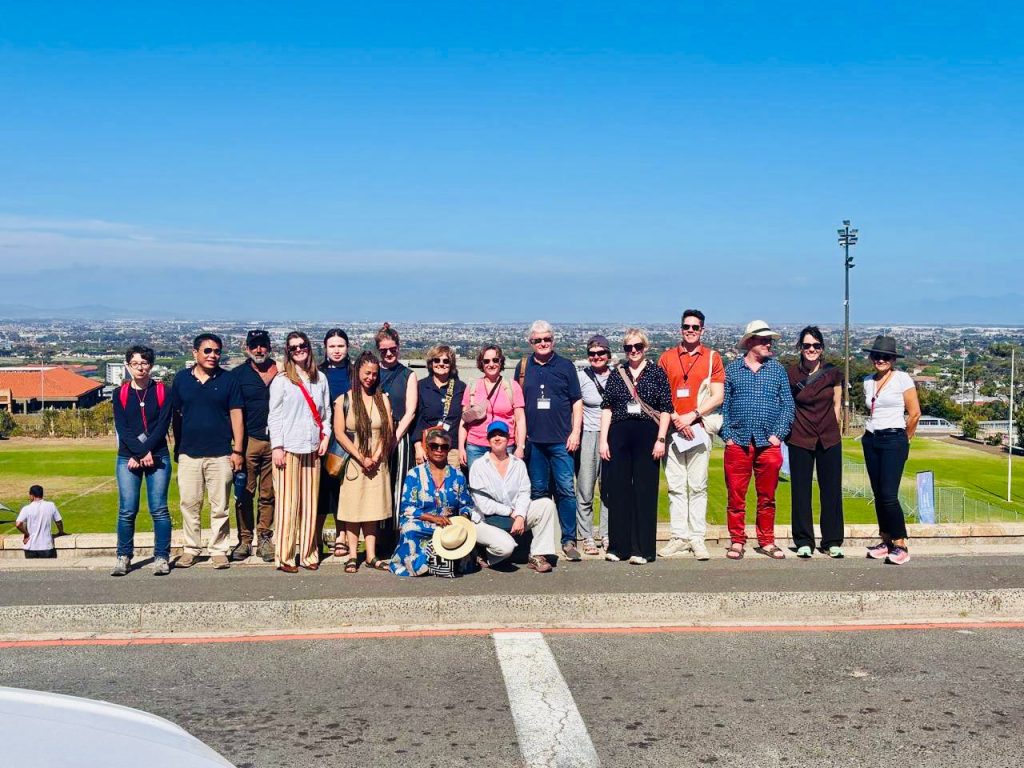
The team facing the now empty pedestal of the Rhodes statue
Our conversations were sparked by the many site visits of contested heritage. Each of the places we visited brought forward their own unique insights into how to deal with complicated colonial pasts and the present. Our visit began with the University of Cape Town Campus where Cecil Rhodes’ statue once stood before being taken down in the #RhodesMustFall movement. At Hiddingh Campus, we were introduced to the carefully composed exhibits of the Center for Curating the Archive. We went from learning about the development of new community-centered policies for treating ancestral remains in Iziko Museums of South Africa, to recognizing the crucial importance of grass-roots movements in the District Six Museum. At the latter museum, we were guided by Ms Susan Lewis, a former resident of District Six. Her story on the experience of forced removal from District Six made clear how present and personal the impact of racism in South-Africa was and still is.
At these sites, various experts, such as activists, museum directors, artists, curators, community organizers, academics – and, of course, people who combined these roles – generously shared their own experiences and approaches to contested heritage. As Mandy Sanger, Education Manager of the District Six Museum told us: there is no single South-African approach. By this, she meant that there is no universal method that should be followed in every case of contested, colonial heritage. Rather, activists, communities, academics and heritage professionals should continue to develop their ways of dealing with these legacies, together. Here we highlight some of the lessons for academics when it comes to working with communities.
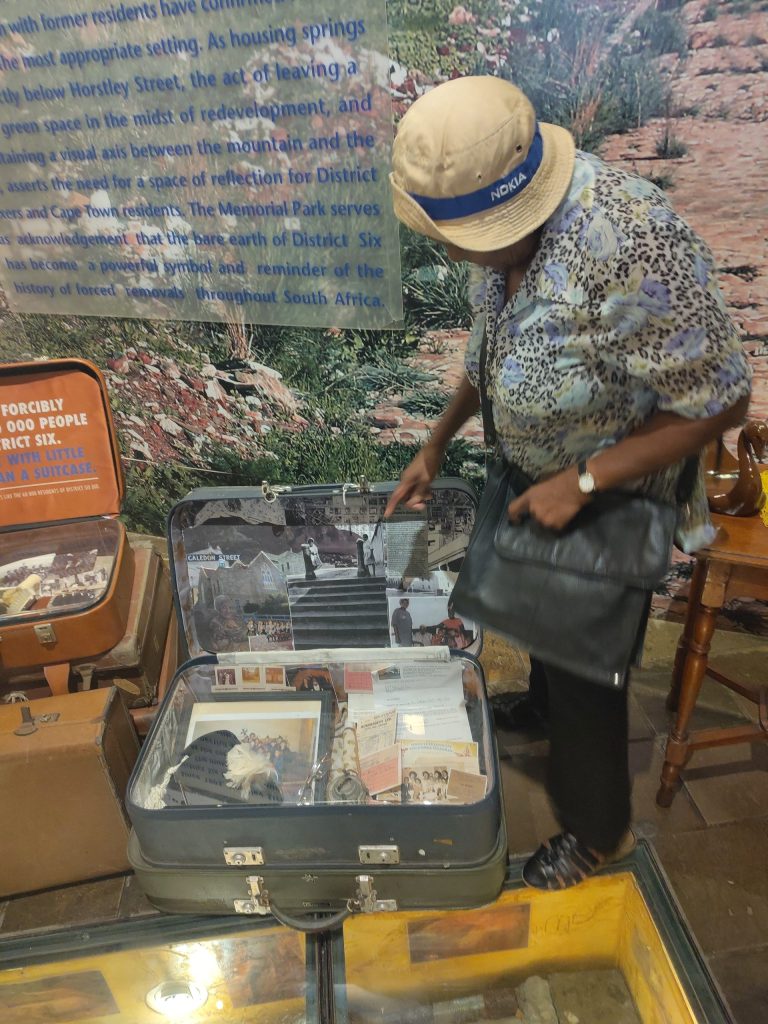
Tour by Ms Susan Lewis in the District Six Museum
How can we work with communities? Inspiration from UCT
In the COLUMN project, we intend to create art interventions to deal with the sensitive and problematic legacies presented by plaster casts from anthropological collections held by European universities. In our case, we are working with plaster casts from the Museum of Man at Charles University in Prague, the Museum of Anthropological Collections at the University of Bologna and the Utrecht University Museum.
These casts were produced under the guise of racial ideologies and created under violent circumstances by scientists between the 1910s and 1930s. During our workshop in Cape Town, we discussed the problems we face with local colleagues and practitioners. We here discuss the lessons learnt from meeting Professor Victoria Gibbon.
Why it is crucial to reach the community?
On the first afternoon, we met Prof Vicky Gibbon from the University of Cape Town. She shared her experiences of working with community members on several projects involving the restitution of human remains. At the beginning, she pointed out that we talk a lot about institutions, but we need to bear in mind that institutions are made up of people. It is also important to recognize the right moment with leadership is an opportunity to deal with these difficult topics and open-ended projects.
She advised that one important consideration when setting up these kinds of projects is the main reason why communities are asked to cooperate. If the reason is restitution, communities are more willing to give their consent. She shared that contact with descendant communities requires a lot of time and must be established in the long term and repeatedly, as it is accompanied by many complicated emotions. The location is also important – for example, university buildings are not neutral places, and some people from the communities do not consider universities to be credible.
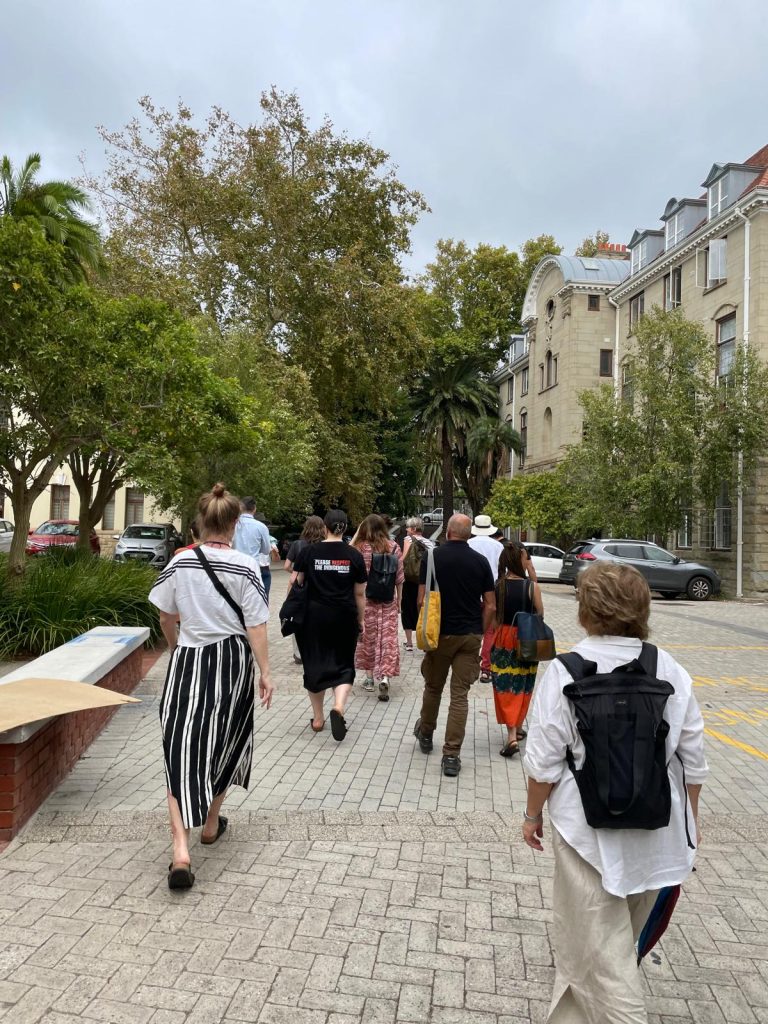
The group walking through Cape Town
How to overcome being an authority
An important part of the process is the exchange of knowledge, which gives people from communities the opportunity to express and share their knowledge. Rather than acting as authorities, scientists here need to start behaving more like partners and acknowledge that they can learn from communities.
Vicky shared how, based on her previous experience, she started conducting research in a completely new way. She started asking community members, “What do you want to know? What questions do you have?” Then, she formulated research questions based on their needs. This is how power starts to be transferred, how colonial legacies might be overcome, and how dynamics can start to change.
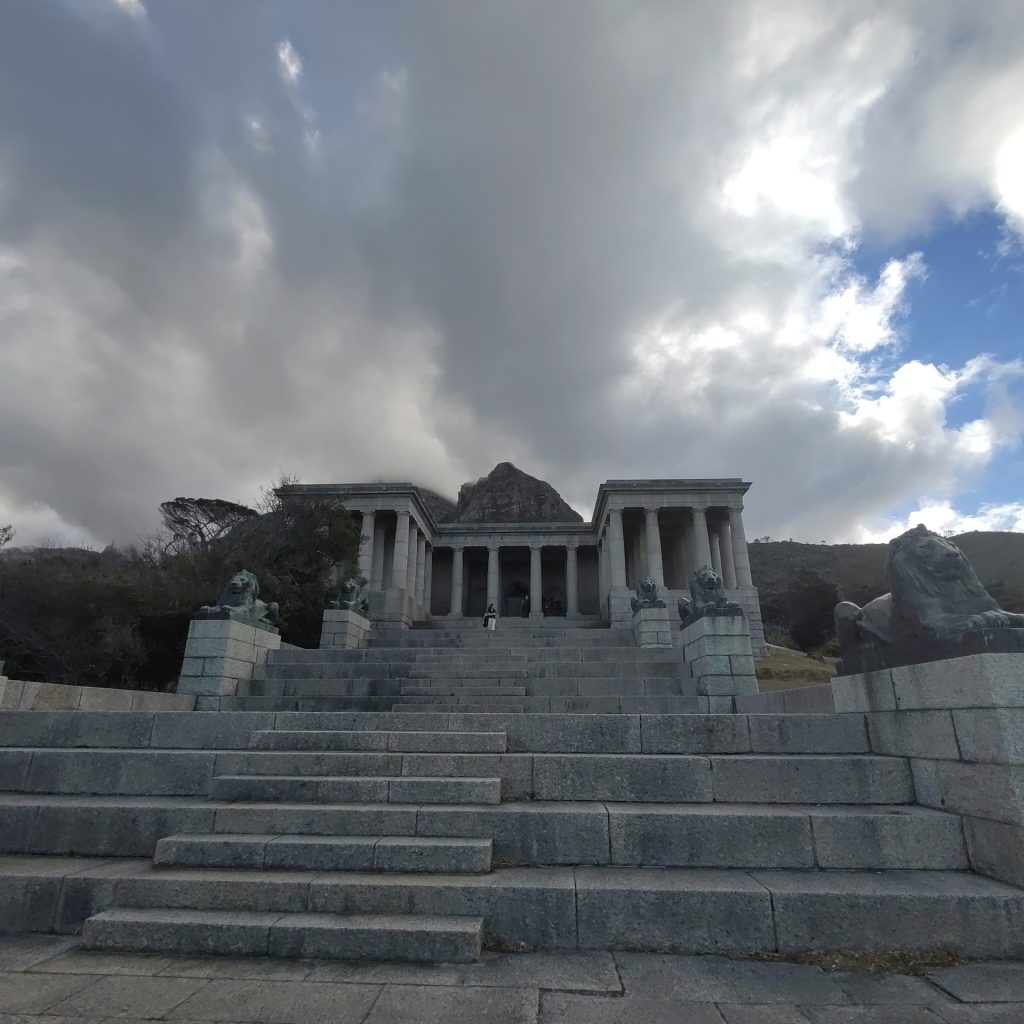
Visit to the Rhodes Monument on Signal Hill, a symbol of the imbalance of power
There is no one size that fits all
Ultimately, she concluded that there is no single correct approach to completing these kinds of project. There is no simple, easy-to-follow list of steps. Every project she was involved in was different. What can we learn from her for our own project?
- We must be open and flexible in our response to what we learn from community members.
- We need to start thinking more rigorously about the ring-fenced notion of ‘communities’ that academia often promotes.
- Don’t expect anything; listen to people.
- Be careful how we start the dialogue with communities.
- Consider where the contact and dialogues will take place.
Professor Victoria Gibbon (full profile)
Professor Victoria Gibbon has played a key role in the restitution of unethically obtained human remains — as former curator of the UCT Human Skeletal Repository, she initiated restitution processes and established new ethical procedures for their care. She is a biological anthropologist at the University of Cape Town’s Department of Human Biology, specializing in forensic taphonomy, forensic identification, human variation, and bioarchaeology. Her research focuses on medico-legal death investigations, time-since-death estimation standards, and bioarchaeological research aimed at understanding South African history and heritage.
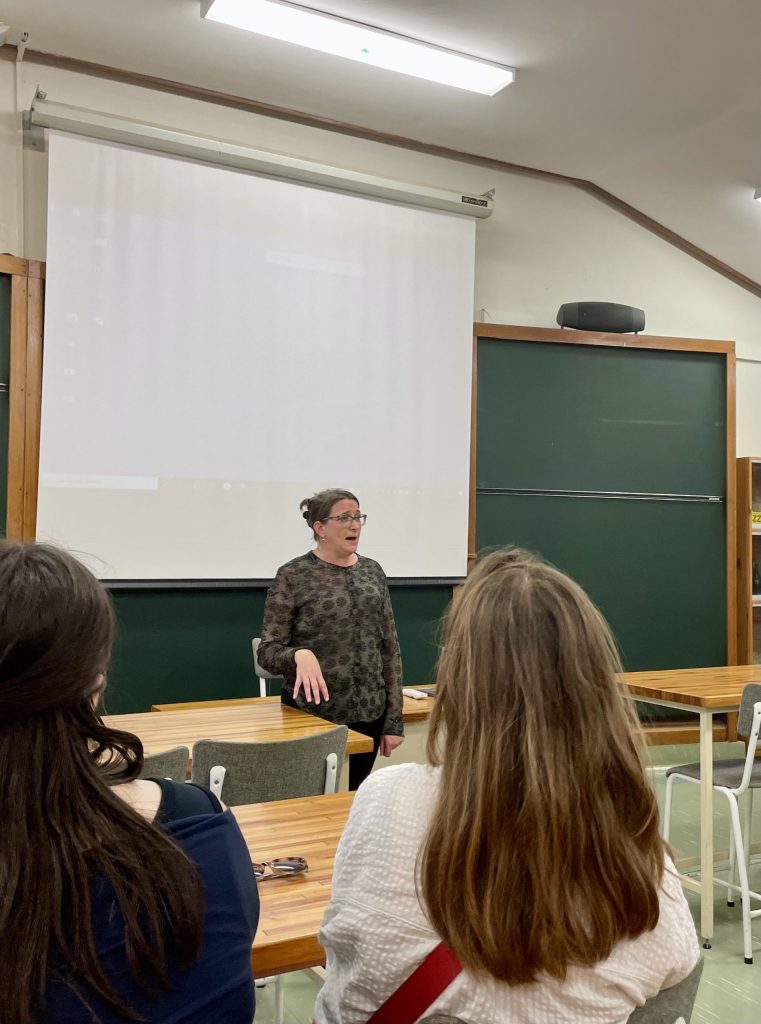
Visit and discussion at UCT with Professor Victoria Gibbon